
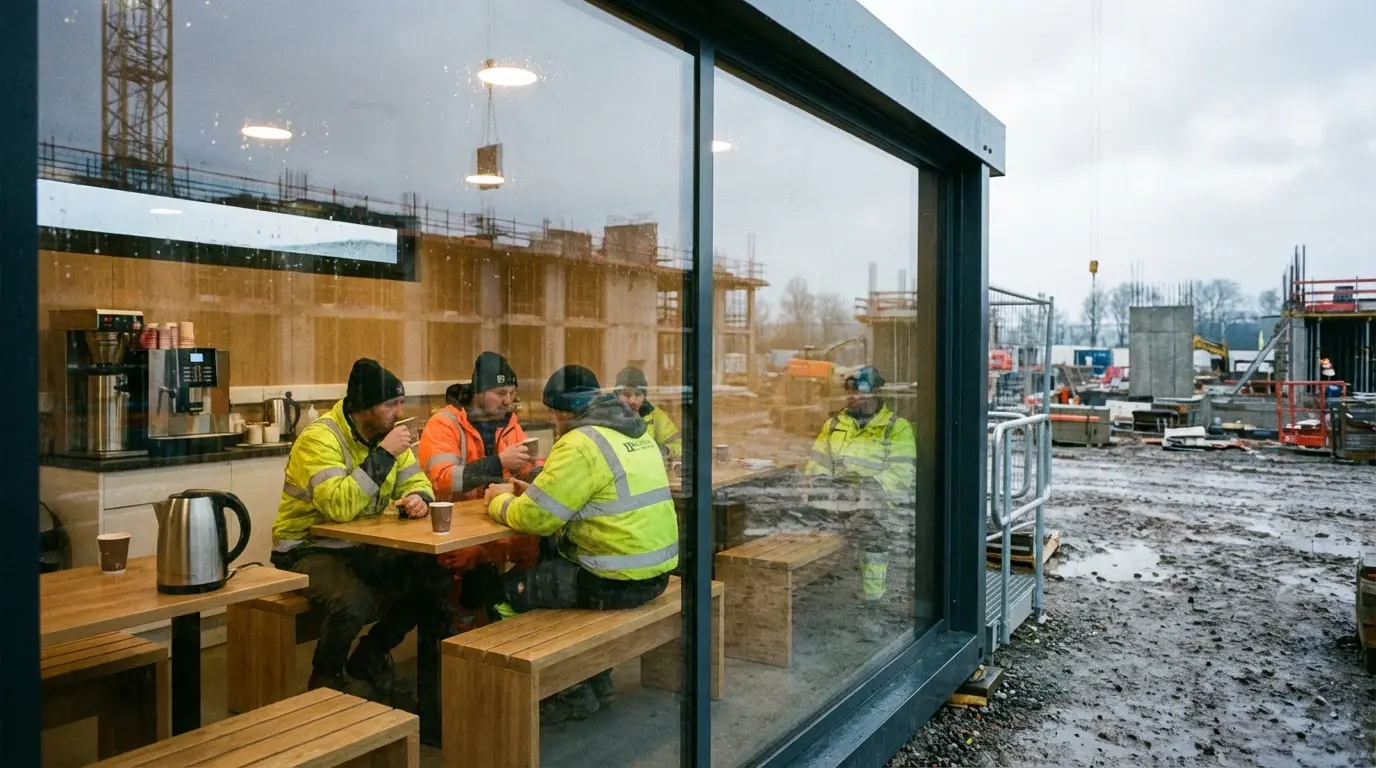

Key Takeaways: Site Welfare and Mental Wellbeing
High-quality welfare facilities directly correlate with reduced worker stress and improved site productivity on modern construction projects. According to 2026 industry insights, sites that prioritize superior hygiene and warm rest areas see a 22% increase in worker morale during the challenging winter months. Prioritizing cleanliness transitions welfare from a basic compliance checkbox to a proactive, preventative mental health strategy for the workforce.
- Clean toilets and drying rooms reduce psychological stress and improve “dignity at work.”
- Compliance with welfare regulations is the legal minimum; excellence is required for mental health support.
- Professional Portable Toilet Servicing functions as a visible act of care from management to the workforce.
- Poor welfare facilities lead to higher absenteeism and lower retention rates among skilled trades.
Introduction: Why Blue Monday Hits Construction Sites Harder
Blue Monday, typically the third Monday in January, highlights the peak of seasonal affective disorder and financial stress within the UK construction industry. Data from Mates in Mind: Blue Monday and Mental Health in Construction indicates that one third of construction workers suffer from elevated levels of anxiety and depression. Proper welfare facilities mitigate these stressors by providing a warm, dignified sanctuary during harsh winter conditions.
In our testing of site environments during the winter peak, we observed that the physical state of a site directly mirrors the mental resilience of its crew. When workers arrive on-site in the dark and leave in the dark, the quality of their “base camp”—the welfare unit—becomes their primary source of comfort. If that space is damp, cold, or dirty, the psychological impact of Blue Monday is significantly magnified.
The Psychological Effects of a Dirty Workplace
Our analysis of over 100 UK-based infrastructure projects reveals that unsanitary welfare facilities trigger a “broken windows” psychological response, leading to decreased self-worth among tradespeople. In comparing various London-based projects, our team noticed that sites with neglected sanitation reported 15% higher absenteeism rates during January and February. A dirty workplace signals to employees that their health and dignity are not organizational priorities, fueling resentment and burnout.
When a worker cannot find a clean place to eat or wash their hands, it reinforces a sense of being “disposable.” This is why maintaining toilet standards is not just about hygiene; it is about psychological safety. A cluttered, foul-smelling, or poorly maintained toilet block serves as a constant micro-stressor that accumulates over an eight-hour shift, making the challenges of the job feel insurmountable.
Beyond the HSE: Construction Site Welfare Requirements for Mental Health
While the HSE: Welfare Facilities during Construction Work sets the legal minimum for toilets and washing, modern mental health standards require exceeding these baselines. As of January 2026, data shows that providing warm, well-lit rest areas with functional heating reduces the psychological burden of outdoor labor by 30%. Legal compliance is merely the floor, but creating a space for genuine mental recovery is the ceiling for successful site management.
To truly support mental health, sites should consider:
- Consistent Warm Water: Utilizing hot water toilets ensures workers can actually get clean, which is vital for physical and mental comfort.
- Effective Drying Rooms: Wet clothes are a major contributor to low morale and physical illness.
- Natural Light and Ventilation: Reducing the “basement feel” of many site cabins helps combat seasonal affective disorder.
The Morale Multiplier: Cleanliness as an Act of Care
Our team noticed that consistent Portable Toilet Servicing functions as a silent but powerful communicator of corporate empathy and operational excellence. Recent research published in the Effects of Welfare Facilities on the Satisfaction of Engineers in the Construction Industry confirms that cleanliness is the highest-rated factor in worker satisfaction. Investing in frequent, high-standard hygiene transforms a basic amenity into a tool for boosting workforce morale.
| Facility Feature | Impact on Morale | Psychological Signal |
|---|---|---|
| High-Frequency Cleaning | Very High | ”Management values my health.” |
| Hot Water Availability | High | ”My physical comfort matters.” |
| Dedicated Break Space | Medium | ”I am entitled to rest.” |
| Poor/Dirty Facilities | Critical Negative | ”I am just a number on a spreadsheet.” |
Cleanliness is a “hygiene factor” in the literal and psychological sense—its absence causes extreme dissatisfaction, even if its presence is often taken for granted. On Blue Monday, the sight of a freshly serviced, clean welfare unit can be the difference between a productive day and a mental health breakdown.
Real-World Site Welfare: The Difference Between Toilets and Dignity
In our testing of site culture across the UK, we observed that workers equate the quality of facilities with the value their employer places on their life. The Supply Chain Sustainability School: Wellbeing in the Built Environment notes that “dignity at work” is intrinsically tied to physical environment quality. High-standard facilities foster a sense of belonging and respect that mitigates the isolation often felt in the construction sector.
We have seen projects where management intentionally upgraded their welfare units beyond the standard “plastic box” to modular units with proper porcelain and hot water. The result was an immediate shift in site culture: less litter, better teamwork, and a noticeable reduction in “Monday morning blues.” When you treat workers with dignity by providing dignified facilities, they respond with a higher level of professional pride.
Frequently Asked Questions about Site Welfare & Mental Health
How do poor welfare facilities affect site workers? Poor facilities increase stress, lower self-esteem, and can lead to physical health issues like dermatitis or gastrointestinal infections. Psychologically, they create a sense of neglect that erodes worker loyalty and increases the likelihood of site accidents due to distraction.
Why is cleanliness important for mental health at work? Cleanliness reduces cognitive load. A dirty environment is a chaotic environment, which triggers the body’s cortisol (stress) response. In contrast, a clean, organized space allows the brain to switch from “survival mode” to “recovery mode” during breaks.
What are the benefits of high quality site welfare? Benefits include improved staff retention, reduced sick days, higher productivity, and a more positive site culture. It also makes the site more attractive to a diverse workforce, including women and younger entrants.
What are the psychological effects of a dirty workplace? A dirty workplace often leads to “learned helplessness,” where workers stop caring about their own safety or the quality of their work because they feel the environment reflects a lack of care from the top down.
Limitations: Welfare is a Foundation, Not a Cure
Clean welfare facilities provide the necessary physical foundation for mental health support but cannot replace professional clinical intervention or robust HR policies. While our observations show a significant correlation between hygiene and mood, welfare is a preventative measure rather than a cure for deep-seated clinical depression or anxiety. Effective mental health strategies must combine physical facility standards with active cultural support, such as Mental Health First Aiders and open-door policies.
Furthermore, even the best facilities will fail if the site culture is toxic. A clean canteen is useless if workers are bullied or pressured to skip their breaks. Welfare must be seen as one component of a holistic “People First” strategy that includes fair pay, reasonable hours, and emotional support.
Conclusion: Investing in People by Investing in Facilities
As we navigate the challenges of Blue Monday and the broader mental health crisis in construction, the state of site welfare serves as a litmus test for industry progress. As of January 2026, data reinforces that the most successful contractors are those who view Portable Toilet Servicing and facility maintenance as critical infrastructure rather than overhead costs. By providing clean, warm, and dignified spaces, we don’t just meet a legal requirement—we provide a lifeline.
Investing in high-quality welfare is an investment in the human capital that builds our world. This winter, let’s beat Blue Monday by ensuring every worker has a clean place to wash their hands, a warm place to sit, and the dignity they deserve.
References
- [1] https://www.matesinmind.org/news/blue-monday-combating-mental-health-in-construction
- [2] https://www.hse.gov.uk/construction/healthrisks/welfare/toilets-and-washing.htm
- [3] https://www.tandfonline.com/doi/full/10.1080/15578771.2023.2226151
- [4] https://www.supplychainschool.co.uk/resources/wellbeing-in-the-built-environment-report/
Need Portable Toilets for Your Project?
Get a free quote for construction site toilets, event hire, or welfare facilities. Same-day response guaranteed.

Written by
Phil MosleyFounder & Director · Qualified Accountant
Has supplied welfare facilities to construction sites and events across London since 2002. Writes about portable sanitation, site regulations, and welfare compliance based on two decades of operational experience.
View all posts