
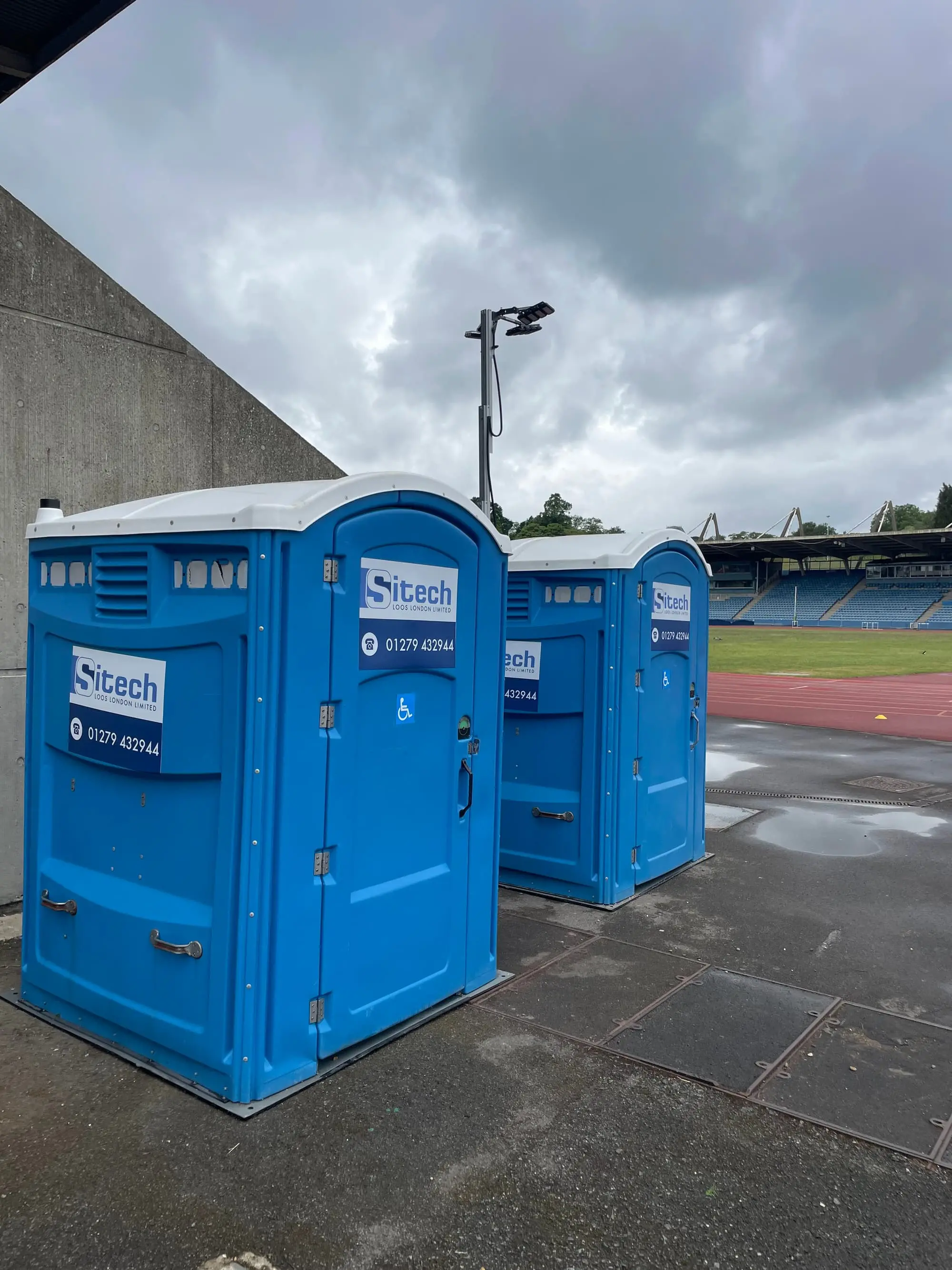

Executive Summary: Portable Toilet Rental Guide
🎯 Quick Answer
Portable toilet rental provides temporary sanitation facilities for construction sites, events, and any location without permanent toilet access. Units are delivered, set up, serviced weekly, and collected when no longer needed.
- Standard hire: From £25-60 per week for chemical units, with delivery and servicing additional
- Types available: Standard construction, hot water, mains-connected, event/luxury, and disabled access
- Key use cases: Construction sites, outdoor events, festivals, emergency facilities, and rural properties
- What’s included: Delivery, unit, weekly servicing, consumables (toilet paper, soap, hand wash), and collection
Continue reading for a detailed breakdown of every aspect of portable toilet rental, from choosing the right unit to understanding the true costs involved.
Hiring a portable toilet for the first time can feel overwhelming. With different unit types, varying pricing structures, and a range of suppliers to choose from, it is easy to feel unsure about what you actually need. Whether you are a construction site manager planning welfare facilities, an event organiser arranging sanitation for guests, or a facilities manager sourcing temporary solutions, this guide covers everything you need to know about portable toilet rental in the UK.
At Sitech Loos London, we have spent years providing portable toilet hire across London and the South East. This guide draws on that experience to give you honest, practical advice — not just generic information you could find anywhere.
ℹ️ Transparency: This guide provides factual, experience-based information about portable toilet rental. Some links connect to our products and services. All pricing is indicative and based on typical UK market rates at the time of writing. For an accurate quote tailored to your project, contact us directly.
Table of Contents
- What is Portable Toilet Rental?
- Types of Portable Toilets Available for Rent
- Portable Toilet Rental Costs and Pricing Guide
- Common Uses for Portable Toilet Rental
- How to Choose the Right Portable Toilet Supplier
- Portable Toilet Servicing and Maintenance
- Legal Requirements and Regulations
- Benefits of Professional Portable Toilet Rental
- How to Get the Best Portable Toilet Rental Deal
- Installation and Setup Process
- Troubleshooting Common Issues
- Frequently Asked Questions
- Conclusion
- References
What is Portable Toilet Rental?
Portable toilet rental is a service where a supplier delivers self-contained toilet units to your site, maintains them throughout the hire period, and collects them when you are finished. It is the standard way to provide sanitation on construction sites, at outdoor events, and in any temporary location without access to permanent facilities.
How Portable Toilet Rental Works
The process is straightforward:
- Enquiry & Quote: You tell the supplier what you need — the type of unit, how many, the hire duration, and your location. They provide a quote.
- Delivery & Setup: The supplier delivers the units on your chosen date and positions them on site. Standard units require nothing more than a level, firm surface.
- Weekly Servicing: A technician visits on a regular schedule (typically weekly) to empty the waste tank, deep-clean the unit, refill chemicals, and restock consumables like toilet paper and soap.
- Collection: When the hire period ends, the supplier collects the units and handles all waste disposal.
For a deeper look at the technology behind these units, see our guide on how portaloos work.
Rental vs Purchase: Which Makes More Sense?
For most businesses, renting is significantly more cost-effective than buying. Purchasing a portable toilet outright costs £800-£2,000 per unit, but then you are also responsible for ongoing servicing, chemical supplies, waste disposal licensing, and storage when not in use. Renting bundles all of these into a simple weekly fee, eliminating the administrative burden. Unless you need facilities permanently on a fixed site for years, rental is almost always the better option.
Types of Portable Toilets Available for Rent
Understanding the different types of portable toilets available helps you select the right unit for your specific needs. Each type is engineered for particular environments and use cases.
Standard Chemical Portable Toilets
The workhorse of the industry. Standard chemical units like the Satellite Maxim 3000 are robust, self-contained toilets designed to withstand the demanding conditions of construction sites. They use a chemical holding tank to manage waste and control odours, with an integrated hand wash basin, soap dispenser, and paper towel holder.
Best for: Construction sites, renovation projects, multi-trade sites, and any application where durability matters more than aesthetics.
Key features:
- Heavy-duty double-skin HDPE construction
- Chemical waste system with odour control
- Integrated hand wash station with fresh water
- Non-slip flooring
- No external power or water connection needed
Hot Water Portable Toilets (110V)
A step up from standard units, the 110V Hot Water Portable Toilet connects to your site’s 110V power supply to deliver genuine hot running water for hand washing. This is not a luxury — it is a compliance requirement on many UK construction sites, particularly during winter months.
Best for: Winter construction projects, premium sites, client-facing developments, and any project where HSE compliance on hand washing is a priority.
Key features:
- 110V connection for safe on-site operation
- On-demand hot water for superior hand hygiene
- Exceeds basic HSE welfare requirements
- All standard features plus heated wash
For a detailed look at why 110V hot water matters for compliance, read our 110V hot water toilet hire guide.
Mains-Connected Portable Toilets (240V)
The 240V Mains Portable Toilet is designed for long-term or permanent installations. Connected directly to mains electricity, it provides unlimited hot water and integrated LED lighting. These units replicate the experience of a permanent indoor toilet, making them ideal for depots, yards, and semi-permanent construction sites.
Best for: Long-term projects (6+ months), industrial facilities, depots, campsites, and permanent installations.
Key features:
- Mains-powered unlimited hot water
- Integrated LED interior lighting
- Year-round performance regardless of season
- Requires mains electrical connection
For a detailed comparison between chemical and mains units, see our chemical vs mains connected toilets guide.
Event & Luxury Portable Toilets
The Shorelink International Event Toilet is designed specifically for occasions where guest experience matters. With a clean, modern aesthetic, integrated air freshener system, mirror, and coat hook, these units provide a noticeably superior experience compared to standard site toilets.
Best for: Weddings, festivals, corporate events, garden parties, and any occasion where impressions count.
Key features:
- Event-ready, clean modern design
- Integrated air freshener system
- Mirror and coat hook
- Optional LED lighting for evening events
Disabled Access Portable Toilets
The Satellite Disabled Access Unit provides inclusive, dignified facilities for wheelchair users and people with mobility requirements. These DDA-compliant units feature a spacious interior, ramp access, and strategically positioned grab rails.
Best for: Public events (legally required), construction sites, family areas, and any environment prioritising accessibility.
Key features:
- Extra-wide door and wheelchair-accessible ramp
- Internal grab rails for support
- Spacious interior for wheelchair users and carers
- Optional baby changing table
Portable Toilet Rental Costs and Pricing Guide
Understanding the true cost of portable toilet rental means looking beyond the headline weekly rate. Here is a realistic breakdown of what to expect in the UK market.
Weekly and Monthly Rental Rates
Typical weekly hire rates (excluding delivery and servicing):
| Unit Type | Weekly Rate | Monthly Rate (approx.) |
|---|---|---|
| Standard Chemical (e.g., Maxim 3000) | £25 - £60 | £100 - £240 |
| 110V Hot Water | £60 - £90 | £240 - £360 |
| 240V Mains Connected | £80 - £120 | £320 - £480 |
| Event / Luxury | £70 - £110 | £280 - £440 |
| Disabled Access | £40 - £80 | £160 - £320 |
Note: These are indicative market rates. Actual prices vary by supplier, location, and contract length. Long-term hires of 3+ months often attract discounted rates.
Delivery and Collection Fees
Most suppliers charge separately for delivery and collection. Expect to pay £50-£150 per trip depending on distance from the supplier’s depot. Some suppliers include delivery in the first week’s hire cost, while others list it as a separate line item. Always clarify this when requesting quotes.
For sites in London, additional costs such as the Congestion Charge and ULEZ fees may apply to each delivery and service visit. This is an important consideration for long-term hires — the cumulative transport surcharges can significantly increase total costs.
Service and Maintenance Costs
Weekly servicing typically costs £15-£35 per visit per unit. This covers:
- Waste tank emptying and disposal
- Interior deep clean and sanitisation
- Chemical refill
- Fresh water top-up
- Consumable restocking (toilet paper, soap, paper towels)
Some suppliers bundle servicing into the weekly hire rate, while others charge it separately. At Sitech, we include weekly servicing as standard with every hire — no hidden extras.
Hidden Costs to Watch For
When comparing quotes, look out for:
- Environmental or waste disposal levies charged on top of servicing
- Minimum hire periods (commonly 4 weeks)
- Damage deposits or excess charges
- Bank holiday surcharges for service visits
- Late cancellation fees for schedule changes
Common Uses for Portable Toilet Rental
Construction Sites and Building Projects
Construction sites are the largest market for portable toilet rental. Under UK law, every construction site must provide adequate welfare facilities from day one — not as an afterthought. The CDM 2015 regulations require suitable and sufficient sanitary conveniences for all workers, with the Principal Contractor bearing legal responsibility.
For most sites, the standard Maxim 3000 provides excellent, compliant welfare. Larger or multi-phase projects often benefit from a mix of unit types — standard toilets for general use, 110V hot water units for winter compliance, and a disabled access unit for inclusivity. The recommended ratio is one toilet per seven workers based on BS6465 [3].
Outdoor Events and Festivals
Events present different challenges: high footfall over a short period, guest experience expectations, and often remote venues without infrastructure. For weddings and corporate events, event-grade toilets make a noticeable difference to guest satisfaction. For larger festivals, a combination of standard and accessible units ensures adequate coverage.
A good rule of thumb for events is one toilet per 100 guests for a day event, or one per 50 for an evening event where alcohol is served. Our team regularly supplies events across London, Hertfordshire, Essex, and Kent.
Emergency and Temporary Situations
Portable toilets provide essential sanitation during building renovations where existing facilities are out of commission, plumbing emergencies, insurance claims, and disaster relief. The self-contained nature of chemical units makes them ideal for rapid deployment — no plumbing, no power, just a level surface.
How to Choose the Right Portable Toilet Supplier
Not all portable toilet suppliers are equal. The cheapest quote is rarely the best value. Here is what to look for.
Key Factors to Consider
Reliability above all. A missed service visit means immediate non-compliance on a construction site and unhygienic conditions anywhere. Ask potential suppliers about their service guarantee, what happens if they miss a visit, and whether they have backup capacity. Local suppliers with nearby depots tend to be more reliable than national companies routing from distant locations.
Fleet quality matters. Ask how old the supplier’s fleet is and how units are maintained between hires. A well-maintained unit from a quality manufacturer like Satellite will outperform a cheap unit that has been poorly maintained. At Sitech, every unit is inspected and deep-cleaned between every hire.
Transparent pricing. The best suppliers provide all-inclusive quotes that clearly state what is and is not included. Be wary of quotes that seem too good to be true — they often exclude servicing, delivery, or essential consumables.
Service Area and Availability
Choose a supplier who genuinely covers your area with regular service routes. A supplier based 100 miles away may struggle with weekly servicing commitments, particularly for sites in congested areas like London or North London.
At Sitech, we serve the following areas with established service routes:
- London (all 32 boroughs)
- North London, South London, East London, West London
- Hertfordshire — Watford, St Albans, Stevenage
- Essex — Chelmsford, Basildon, Colchester
- Kent — Maidstone, Dartford, Canterbury
Fleet Quality and Maintenance Standards
Professional suppliers maintain their fleet to high standards between hires. Key indicators of quality include:
- Units are cleaned and sanitised between every hire, not just spot-checked
- Consumables are always included as standard (toilet paper, soap, paper towels)
- Damaged or worn components are replaced proactively, not when they break
- Service records are maintained for compliance audits
Portable Toilet Servicing and Maintenance
Regular servicing is the single most important factor in keeping portable toilets hygienic and compliant. It is also the area where cutting corners has the biggest consequences.
Regular Service Schedules
The industry standard is weekly servicing, but the right frequency depends on usage:
| Users Per Unit | Recommended Service Frequency |
|---|---|
| 1-7 workers | Weekly |
| 8-15 workers | Twice weekly |
| 16+ workers | Three times weekly or additional units |
| Event (light use) | Daily if multi-day event |
| Event (heavy use) | Twice daily |
What’s Included in Servicing
A professional service visit covers every aspect of the unit. For a detailed breakdown of the process, including waste removal, tank cleaning, chemical refill, fresh water replenishment, and interior sanitisation, see our portable toilet servicing page.
At Sitech, our technicians follow a standardised checklist on every visit:
- Waste tank pumped and cleaned
- Fresh chemical solution added
- Fresh water tank refilled
- All interior surfaces sanitised
- Toilet paper, soap, and paper towels restocked
- Exterior washed down
- Service record completed
Hygiene Standards and Compliance
On construction sites, the HSE expects welfare facilities to be maintained in a “clean and orderly condition” throughout the project [2]. A dirty or poorly stocked toilet is a compliance failure, regardless of how recently it was installed. For detailed hygiene requirements, see our construction site toilet hygiene standards guide.
For sites generating large volumes of waste, septic tank emptying may be required as a supplementary service for holding tanks or cesspit systems.
Legal Requirements and Regulations
Understanding the legal framework helps you stay compliant and avoid costly penalties.
Health and Safety Regulations
The primary legislation governing portable toilet provision on UK construction sites is the Construction (Design and Management) Regulations 2015 (CDM 2015), specifically Schedule 2 [1]. Key requirements include:
- Sanitary conveniences must be suitable, sufficient, ventilated, lit, and clean
- Washing facilities must include hot and cold (or warm) water, soap, and drying means
- Drinking water must be clearly marked and separate from wash water
- Changing and drying facilities must be provided for workers
The Principal Contractor is legally responsible for ensuring these facilities are in place from day one. Delegation to a hire company does not transfer the legal obligation. For a comprehensive breakdown of current enforcement priorities, see our construction welfare regulations 2026 guide.
Planning Permission Requirements
Private land: Planning permission is not normally required for temporary portable toilets placed on private land, such as construction sites or event venues.
Public land: If units must be placed on a public highway, pavement, or council-owned land, you will need a placement permit from the relevant local authority.
Mains connections: Connecting a portable toilet to the public sewer system may require discharge consent from your local water authority (e.g., Thames Water in London).
Environmental Considerations
All waste from portable toilets must be disposed of by a licensed waste carrier in accordance with the Waste Duty of Care regulations [4]. This includes:
- Maintaining Waste Transfer Notes for every collection
- Using only Environment Agency licensed treatment facilities
- Ensuring waste is not discharged into watercourses or drains
Professional suppliers handle all waste disposal as part of the service agreement. At Sitech, waste disposal is fully included and compliant — you never need to worry about waste documentation.
Benefits of Professional Portable Toilet Rental
Cost-Effectiveness vs Buying
Renting eliminates the significant capital outlay of purchasing units (£800-£2,000 each), plus the ongoing costs of servicing equipment, chemical supplies, waste disposal licensing, and storage. You pay a predictable weekly fee that covers everything, with the flexibility to scale up or down as your project evolves.
Professional Maintenance and Servicing
Professional servicing ensures units remain hygienic, fully stocked, and compliant throughout the hire. Attempting to service units yourself requires a vacuum tanker (£50,000+), waste carrier licence, chemical supplies, and trained personnel. For most businesses, outsourcing this to a specialist is vastly more practical and cost-effective.
Compliance with Regulations
A reputable hire company ensures your facilities meet all legal requirements, from CDM 2015 compliance to waste disposal regulations. They provide service records for your site files, manage Waste Transfer Notes, and alert you if your provision falls below required standards. This compliance support alone can justify the hire cost, given the potential fines for welfare failures.
How to Get the Best Portable Toilet Rental Deal
Getting Multiple Quotes
Always obtain at least three quotes from different suppliers. Compare them on a like-for-like basis — ensure each quote includes the same scope of service (delivery, servicing frequency, consumables, collection). The cheapest headline rate often excludes essential items that inflate the total cost.
Negotiating Long-Term Contracts
If your project runs for 3+ months, negotiate a long-term rate. Most suppliers offer discounts of 10-20% for extended hires, as the reduced delivery and collection frequency improves their margins. Ask about:
- Reduced weekly rates for 3, 6, or 12-month commitments
- Bundled delivery and collection fees
- Fixed-price servicing regardless of fuel or ULEZ cost changes
Understanding Service Inclusions
Before signing, confirm exactly what is included in the weekly rate:
- Is servicing included or charged separately?
- Are consumables (toilet paper, soap, paper towels) included?
- What happens if a service visit falls on a bank holiday?
- Is there a minimum hire period?
- What are the cancellation terms?
Installation and Setup Process
Site Preparation Requirements
Portable toilets require minimal site preparation, but getting the basics right prevents problems:
- Level, firm ground: The unit must sit on stable, level ground. Soft mud or steep gradients will cause the unit to lean, making it uncomfortable and potentially unsafe.
- Hard standing preferred: Concrete, tarmac, or compacted gravel is ideal. If placing on soft ground, consider laying plywood or ground protection boards.
- Drainage consideration: Position the unit where any rainwater runoff flows away from, not towards, the unit entrance.
Access Requirements for Delivery
This is the most commonly overlooked requirement. Consider:
- Vehicle access: Our delivery vehicles need clear access to within approximately 10 metres of the final position. For tight urban sites in areas like East London or South London, discuss access constraints with your supplier in advance.
- Service tanker access: For ongoing weekly servicing, the vacuum tanker hose needs to reach the unit. Position toilets no more than 10 metres from a point accessible by the service vehicle.
- Width restrictions: Standard delivery requires a minimum 2.5-metre access width for the truck.
Positioning and Placement Guidelines
Thoughtful positioning improves user experience and servicing efficiency:
- Close to workers/guests: Place toilets within reasonable walking distance of the work area or event space, but not so close as to cause disturbance
- Downwind if possible: Positioning downwind of the main work or event area reduces any potential odour issues
- Well-lit area: For sites operating early mornings or evenings, place near existing lighting or consider units with integrated LED lighting
- Clear signage: Particularly on large construction sites or event venues, ensure toilets are clearly signposted
Troubleshooting Common Issues
Common Problems and Solutions
| Problem | Likely Cause | Solution |
|---|---|---|
| Strong odour | Overdue service or high usage | Contact supplier for additional service visit |
| Door won’t lock | Latch mechanism worn | Report to supplier for same-day repair |
| No water at basin | Tank empty between services | Request additional mid-week water top-up |
| Unit leaning | Ground has softened | Reposition onto firmer ground or add boards |
| Consumables running out | Higher usage than expected | Request more frequent restocking |
When to Contact Your Supplier
Contact your supplier immediately if:
- The unit is damaged (cracked walls, broken door, damaged tank)
- There is a chemical spill or leak
- The unit has been vandalised
- You need to change the service schedule
- You need additional units at short notice
Most professional suppliers, including Sitech, offer rapid response for urgent issues. Our team can typically attend within hours for genuine emergencies across our London and South East coverage area.
Emergency Procedures
In the event of a serious issue such as a chemical spill:
- Cordon off the area around the unit
- Prevent anyone from entering
- Contact your supplier immediately
- If the spill contacts skin, wash thoroughly with clean water
- Refer to the Safety Data Sheet (SDS) provided with your hire
Frequently Asked Questions
How much does portable toilet rental cost per week?
Weekly portable toilet rental costs typically range from £25-60 for standard chemical units, £60-90 for 110V hot water units, and £80-120 for luxury event or mains-connected units. Delivery, collection, and weekly servicing fees are usually additional. Long-term hire contracts of 3+ months often attract discounted rates.
What’s included in portable toilet rental service?
A standard portable toilet rental includes delivery, initial setup, the unit itself with toilet paper and hand wash supplies, regular weekly servicing (emptying the waste tank, cleaning, and restocking consumables), and collection at the end of your hire period. Some suppliers include delivery in the weekly rate while others charge separately.
How often should portable toilets be serviced?
Portable toilets should be serviced at least once per week as standard. However, high-traffic sites with more than 7 users per unit may require servicing 2-3 times per week. Event toilets with heavy footfall may need daily servicing. Your supplier should adjust the schedule based on actual usage levels.
Do I need planning permission for portable toilets?
Planning permission is usually not required for temporary portable toilet installations on private land, such as construction sites. However, if you need to place units on a public highway or pavement, you will need a placement permit from the local council. For mains-connected units, you may also need a discharge consent from your local water authority.
What’s the difference between standard and luxury portable toilets?
Standard portable toilets are robust, chemical-based units designed for construction sites, with basic hand washing facilities. Luxury or event toilets, such as the Shorelink Event Toilet, offer a superior experience with features like integrated air fresheners, mirrors, coat hooks, clean modern aesthetics, and optional LED lighting — ideal for weddings and corporate events.
How far in advance should I book portable toilet rental?
For standard construction hire, booking 1-2 weeks in advance is usually sufficient. For large events, peak summer season, or orders requiring multiple units, we recommend booking 4-6 weeks ahead. Emergency or same-day delivery may be available depending on your location and current fleet availability.
Are disabled access portable toilets available?
Yes, wheelchair accessible portable toilets are available for hire. These DDA-compliant units feature extra-wide doors, ramp access, internal grab rails, low-level hand sanitiser, and a spacious interior with ample room for wheelchair users and carers. They are required by law for public events and recommended for construction sites.
What happens if a portable toilet is damaged during rental?
Customers are generally liable for repair costs if damage is caused by negligence, misuse, or vandalism. Normal wear and tear is covered by the supplier. It is important to check your hire agreement for specific terms regarding damage liability, insurance requirements, and any excess charges that may apply.
Can portable toilets be connected to mains electricity?
Yes, certain portable toilet models are designed for electrical connection. 110V units connect to standard site power supplies via yellow transformer plugs, providing safe hot water for hand washing. 240V mains units connect directly to domestic power, offering unlimited hot water and integrated LED lighting for permanent or long-term installations.
What area do portable toilet suppliers typically cover?
Most regional suppliers cover a 30-60 mile radius from their depot. National companies may offer wider coverage but often at higher delivery costs. At Sitech Loos London, we serve London and the South East including Hertfordshire, Essex, and Kent, with same-day delivery available for urgent requirements.
Conclusion
Portable toilet rental does not have to be complicated. By understanding the types of units available, the true costs involved, and what to look for in a supplier, you can make a confident, informed decision that keeps your site compliant, your workers comfortable, and your budget under control.
The key takeaways from this guide:
- Match the unit to the use case — a construction site needs a different solution to a wedding
- Look beyond the headline price — delivery, servicing, and hidden fees all add up
- Prioritise reliability — a local supplier with regular service routes beats a cheap national quote every time
- Stay compliant — CDM 2015 welfare requirements are actively enforced and non-negotiable
Ready to get started? Sitech Loos London provides fully serviced portable toilet rental across London and the South East, with weekly maintenance included as standard. Get an instant quote or call us on 01279 432 944 to discuss your project requirements.
References
- [1] https://www.legislation.gov.uk/uksi/2015/51/schedule/2
- [2] https://www.hse.gov.uk/construction/healthrisks/welfare/toilets-and-washing.htm
- [3] https://www.bsigroup.com/
- [4] https://www.gov.uk/government/publications/waste-duty-of-care-code-of-practice/waste-duty-of-care-code-of-practice
- [5] https://www.citb.co.uk/
Need Portable Toilets for Your Project?
Get a free quote for construction site toilets, event hire, or welfare facilities. Same-day response guaranteed.

Written by
Phil MosleyFounder & Director · Qualified Accountant
Has supplied welfare facilities to construction sites and events across London since 2002. Writes about portable sanitation, site regulations, and welfare compliance based on two decades of operational experience.
View all posts